
Marcus Aurelius WROTE HIMSELF into being.

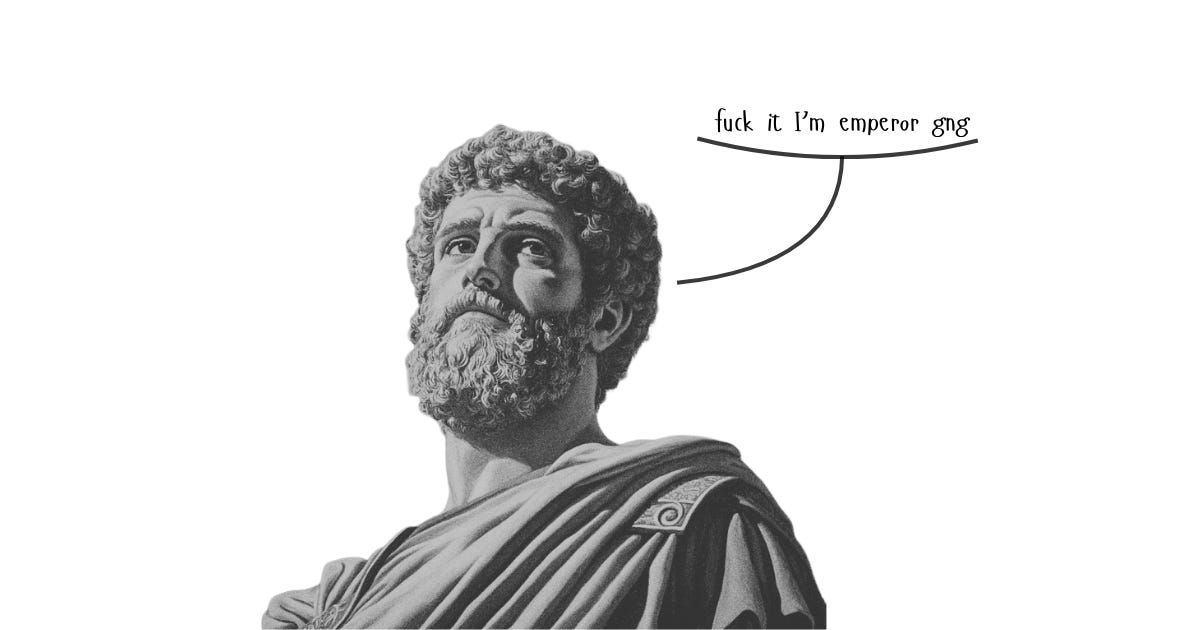
in 174 AD, Marcus Aurelius was on the Danube frontier with the Roman army.
it was winter on the Pannonian plain. the men were cold, hungry, plague-thinned, exhausted. the campaign against the Quadi had dragged for years and would drag for more.
he was the most powerful man on earth.
and he sat in a tent, in the cold, and wrote.
maintaining his interior world.
while everything outside was collapsing.
EMOTIONAL WEATHER
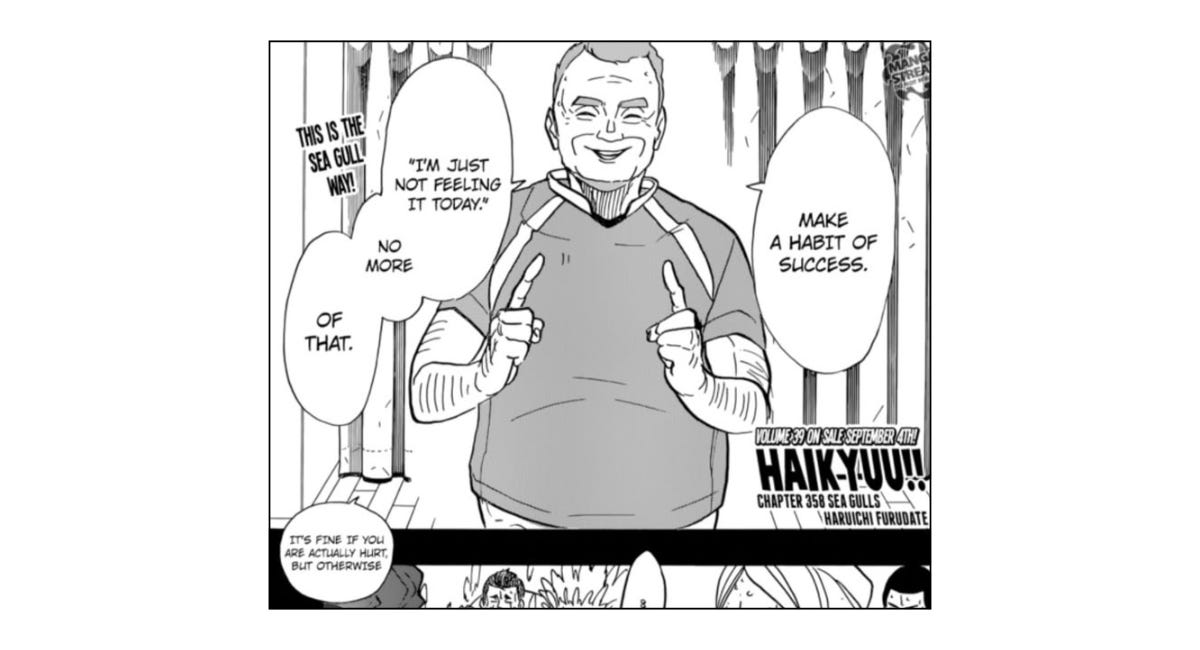
mediocrity is a by-product of allowing your thinking, and thus your actions, to be controlled by your emotional weather, which is ultimately outside of your control.
slept badly — life is shit.
slept well — life is good.
bad meeting — life is shit.
good coffee — life is good.
partner snapped at you — life is shit.
partner smiled at you — life is good.
real thinking, which creates excellence, is structurally rare.
it requires that the mind produce output regardless of what the day handed you. and if your mind cannot do this it’s because nobody has shown you how to build the structure underneath.
if you have not deliberately built an interior architecture — a structure of beliefs, principles, practices, and reflexes that runs independently of everything external — then your mind, and results, are at the world’s mercy.
Marcus had architecture.
and he now has people talking about him 2000 years later.
coincidence? I THINK NOT.
the notebook he kept in the tent on the Pannonian frontier was to maintain this architecture.
and the reason he could keep building it under those conditions was discipline. (a word the modern conversation has wrung dry so worth getting precise about before going further.)
DISCIPLINE
discipline gets used to mean something like “doing the hard thing even when you don’t feel like it.”
which is true on the surface.
but the surface is available for all to see, and you want more.
and that’s what I’m here for.
and beneath the surface is one idea:
discipline is ordered consciousness.
it is the structuring of attention. the deliberate organization of what your mind is allowed to focus on, react to, indulge.
the disciplined man is the man whose mind has been TRAINED to default to “discipline.”
he doesn’t have to “force himself” to train.
he doesn’t have to “discipline himself” to write every morning.
he doesn’t have to “make himself” do stuff.
he does it because that’s who he is.
Marcus in the tent on the Danube isn’t willing himself to be philosophical. he is being philosophical because he has built a mind that thinks philosophically by default.
writing in his notebook is a way to maintain this philosophical identity.
a maintenance routine, by the way, that took him decades to install. his teacher Rusticus handed him Epictetus at twenty-five. 40 years later he was still exploring philosophical ideas, because that’s who Marcus Aurelius was.
SELF-LOVE

discipline is the highest expression of self-love available to you.
I value the future version of me so much that I am willing to put the present version through discomfort to ensure he arrives.
the man who skips the workout is not loving himself.
the man who eats the trash food because he “deserves it” after a hard day is not honoring himself.
“self-care” is not indulgence.
real love of the self looks like a father loving his son.
thinking about my father, and you’ll relate to this dear reader, I can think of countless times in which I thought him harsh or unfair:
why is he nagging me about thing that just doesn’t matter? why is he so demanding? why won’t he just let me be?
it’s because a father who loves his son does not let him eat candy for dinner. he does not let him skip school because he doesn’t feel like it. he does not let him drift through his teen years with no demands placed on him.
he loves him too much to do that.
so he makes him do hard things.
he holds him to standards.
he expects more of him than the boy expects of himself.
and the boy, as a man, looks back and understands what was happening.
discipline is being your own father.
THE PARADOX
at first, discipline is hard.
white-knuckle grit-your-teeth-and-bear it kinda thing.
it’s hard having to show up when you’re tired, when you’d rather do something more entertaining, when you straight up have no idea why you bothered to sit down at your desk and so you just kinda straight into oblivion…
but if you keep showing up for the day, day after day after day, something beautiful happens.
you stop fighting yourself.
the version of you that did not want to train, did not want to write, did not want to read, evaporates.
what is left is a self that simply does the thing.
working out is just…. working out — and you do it because that’s who you are.
working is just… working — and you do it because you find it normal.
the identity has been built.
and the mind, having been trained for long enough, no longer fights itself. the disciplined behaviors now rely on identity, as opposed to effort.
and this is the part where discipline starts to compound on itself.
because the energy that used to be spent being disciplined can now be spent on producing great work.
the man who has stopped fighting himself about whether to train can use that mental capacity to think harder about WHAT to train.
DISCIPLINE IS THE ULTIMATE ACT OF CREATIVE FREEDOM.
the disciplined man becomes the FREE man because his mind is no longer a battleground between the higher and lower selves.
the higher self has won.
AS WITHIN, SO WITHOUT
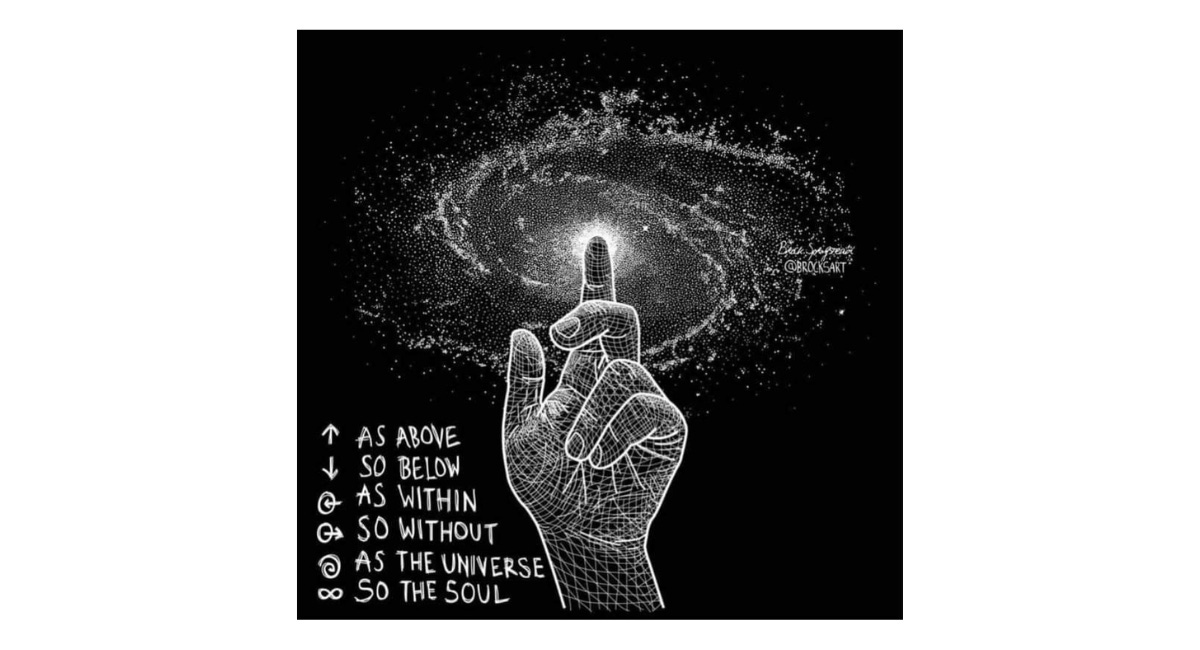
I’m wrapping this up with the underlying message that every single one of my pieces connects to: as within, so without.
the internal world of identity, perception, beliefs, and thought governs that of the external (reality)
you cannot have a chaotic interior and a coherent exterior life.
you cannot have an undisciplined mind and a disciplined output.
the world we walk through every day is, in large measure, a projection of the interior we are walking through it with.
things, events, people, and places are the way you THINK they are.
events appear as negative or positive, wins or losses, depending on how YOU choose to LABEL them.
the world is frozen imagination.
Marcus’s external life — emperor, war, plague, succession crisis, a son named Commodus who would inherit the empire and ruin it within fifteen years — was as chaotic as any human life has ever been:
emperor
succession crisis
war
plague
a son named Commodus who would inherit and ruin everything.
Meditations is an interior life of completely different shape.
ordered. calm. self-examining. cosmic. accepting.
he could not change the external. so he built the internal.
every morning. in the cold. on the Danube. in a tent.
writing.
constructing, reconstructing, strengthening his beliefs.
day after day after day.
Nothing more. Nothing less.
~ Alexander
Follow me on X for more posts on philosophy, personal development, and curating a meaningful existence.
Weekly articles Tuesday, Thursday & Sunday 10:00am PST.
When you’re ready:
Subscribe to Alexander Romance — full archive, free
Join the HELIOS waitlist.
Read the founding essays:


THUMBNAIL CREDIT