
Excellence is a polymath's game

Picture the world as a black box. A room with no light in it, vast in every direction, and you standing somewhere inside of it, blind.
Every single thing you have ever learned is one point of light in that box. The first time you understood why the sky is actually blue — a light. The first time you learned to make scrambled eggs — a light. Psychology is one sector of the room. Biology is another. Money, human anatomy, grief and passion, basketball, the art of Papier-mâché — each one a region of the dark, waiting to be lit.


But a lamp is a heavy thing to light, and most people only ever manage one.
They find their one thing and they pour everything they have into that one corner until it glows, but they mistake their lit corner for the lit room — they’ve conquered their known world, yes, because all they can see is their corner … but, even with this light — which they can use to expand their horizons, they remain afraid of the dark.
You have met this very man. He can only see the world through the one thing he knows. An intellectual incel really; fluent in a single language, frightened of every other, guarding his one lamp against the claws of learning new stuff — ooohh how scary.
This is quite sad; to let your whole life remain a corner I mean. One shot at the entire box — music and art and money and understanding the minute yet fascinating structure of leafs that bring more life into the world than the man scared to experience mild intellectualism stimulus, all of it is waiting right there in the traversable darkness.
These types will tell you to mimic their path, of course. They always do. But never take directions to the edge of the world from a man who has never once left his own street.
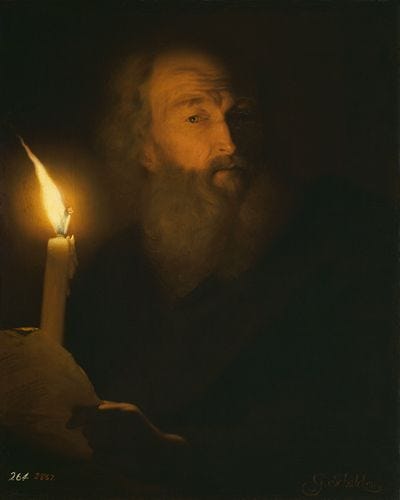
“Specialization is for insects.” — Robert Heinlein
A human being, Heinlein wrote, should be able to change a diaper, plan an invasion, butcher a hog, conn a ship, write a sonnet, balance accounts, set a bone, comfort the dying, take orders, give orders, solve equations, fight efficiently, die gallantly. The narrowing of something down to one minute function is the thing you do to ants or anteaters, not to the wonderful soul of a human being, especially a being who carries great intellectual ambition, someone such as you.
This hunger for knowledge, however, leaves us with a problem: nobody has the lifetimes to actually master everything — so how does any one person light even a fraction of the room?
The reason a polymath can carry and develop curiosity for so many varying subjects without a thousand years to spend on them is that they were never that many things to begin with.
And it only takes a second of introspection to realize this to be true; just think about what you have actually been taught.
Your basketball coach was never really teaching you basketball. Underneath ball handling drills and suicides, he was teaching you to read situations faster than the opposition, to stay calm while your lungs are burning, to develop vision — and see what’s yet to materialize so that you can respond to it with speed. Your piano teacher was never really teaching you piano. She was teaching you that mastery is devoted consciousness; attention devoted for so long that effort turns into a feeling you have for music and rhythm.
Peel the surface off your art teacher, your math teacher, the man who showed you how to throw a punch, your parents, and you find the identical lesson underneath every single time: a new way to see.
“If you know the Way broadly you will see it in everything.” — Miyamoto Musashi
Musashi was the most legendary Japanese swordsman to ever carry a sword. He also painted, sculpted, did calligraphy and ink-wash landscapes — and yet he insisted to the very end that he had only ever practiced one thing.
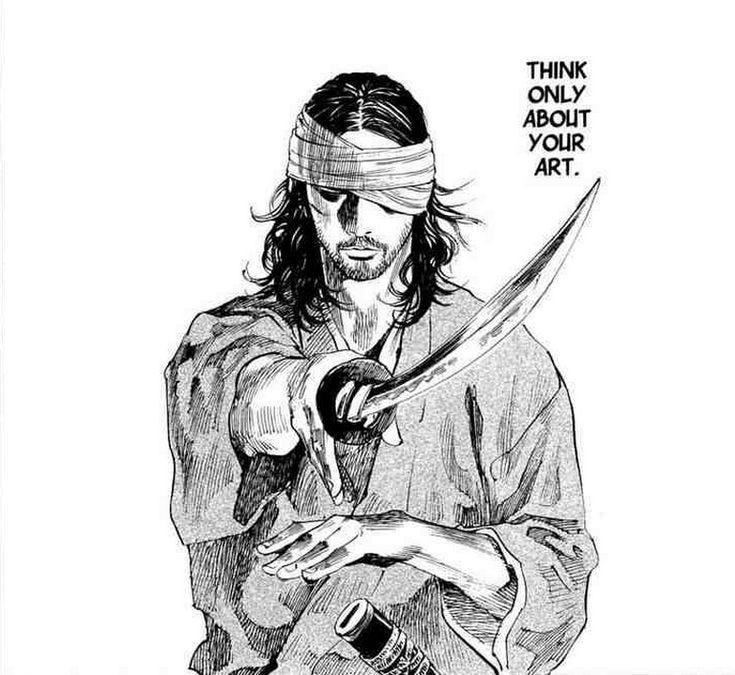
From one thing, he said, know ten thousand things.
The arts — soccer, psychology, mathematics, music, biology, tech, entrepreneurship, yada yada — are not many. They are one art, and that one art is of personal-improvement: the continuous development of who you are and how you see the world, the box gets brighter with every new piece of information — study enough and eventually, no matter which wall you happen to be facing you will find your way around this box, around life and its intricacies, for your light touches all.
"I have no special talents. I am only passionately curious."
— Albert Einstein
There is one man whose light touched more of the box than almost anyone who has ever lived — and it started with a little something that looked like this:
Picture a man kneeling in the mud at the edge of a river, for hours, for days, just drawing whatever catches his eye: how water folds over a stone, the trajectory and speed of a bird’s flight, the golden ratio of plants, and indulging in this practice over and over and over for years.
When this man, Leonardo Da Vinci, finally added plants into his commissioned paintings — into the Virgin of the Rocks, most famous of all for the insight that will follow — botanists came along centuries later and found them correct. Species-accurate that is, painted down to the soil they actually grow in, because he had studied the science of plants he could represent them more beautifully and accurately than any other artist, the artist feeding the scientist feeding the artist, around and around.


That is what a lit box looks like: The Mona Lisa, The Vitruvian Man, the precursor to the tank. Art, science, and war swirling inside one head — the ideal Pinterest-Renaissance-aesthetic-man compressed into the ultimate polymath.
Now don’t get me wrong: depth is real. The specialist who spends ten thousand hours lighting one corner until it burns like the sun is not a fool — he is often irreplaceable, and the world depends on individuals such as him. I am not going to stand here and tell you an inch deep across a hundred subjects beats a mile deep into one.
But look at who commands whom …
The specialist is a soldier — lethal inside his own trench, blind the second he steps out of it.
The polymath is a general.
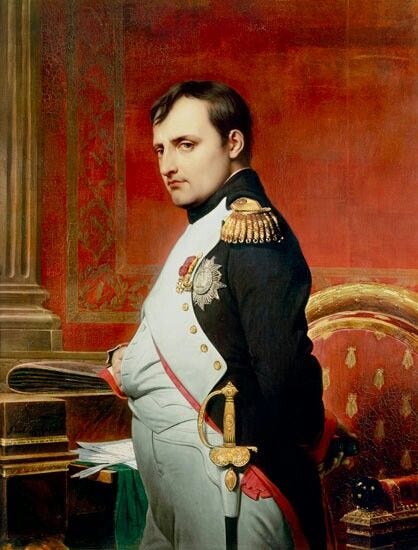
Napoleon could hold terrain and supply lines and the morale of frightened men and the treachery of the men plotting against him and win decisively and do so all at once, his polymath-perfectionist-down-in-the-details-about-every-piece-of-his-empire mindset is the reason he could command armies of specialists who each saw nothing but their own narrow slice of the Napoleonic Empire pie.

The visionary does not reject depth, choosing instead to aim it, he points a hundred experts at a single horizon, because he is the only man able to see the horizon.
“To the man with a hammer, the world looks like a nail.” — Charlie Munger
Give a man a single tool, Munger said, and he will torture all of reality into the shape that fits it. The specialist in his one lit corner is, much like the men in Plato’s Cave, mistaking what he sees for all there is to see; with depth often comes blindness.
Perception is the name of the game; what you see decides what you can reach for — what you can act upon, — what you reach for decides what you do, and what you do decides who you become. What you see is, ultimately, what you get to build.
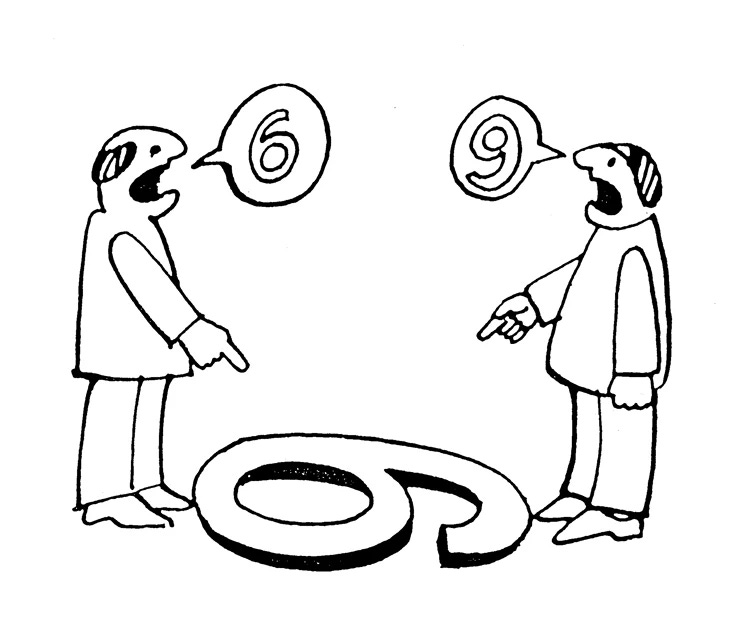
Two men can look upon the same chessboard yet see different realities. Two men can feel the rain yet experience different realities. The only difference between these men is how much light each one has spent his life pouring into, melting away, chipping away at, the dark.
“The best perspective is all perspectives.” — Dan Koe
The greatest experience you will ever have in the realm of personal development is feeling a new perspective arrive. If you have ever studied one thing, a math problem you simply can’t seem to warp your head around, long enough you get a click, what once looked like frightening nonsense suddenly turns familiar, almost easy, natural, like the fog lifting off.
That is one lamp coming one. Multiply it by a hundred disciplines and interests across a lifetime and understand that what you’re doing is continuously reshaping, piece by piece, the reality you experience. There is nothing a person can do more beautiful with time than shaping the very reality they inhabit. There is nothing more exciting.
It is your duty as an ambitious, intellectual, curious man to feed your curiosities, feed your obsessions, feed your every passion because that is how you become irreplaceable — there is nobody, not in the 8+ billion people that live and breath on this planet, quite like you, with your specific intersection of interests, ambition, and ideas.
A polymath is not a man who knows many things, but a man who can make his way through the world with ease because everything is, fully or partially, lit, carrying himself with confidence because even the mysterious, darker caverns he’s yet to explore will be made into adventurous quests for knowledge because he carries with him a small light, a small flame, the most important idea of all, the idea that all arts are one, his is simply a quest of developing his personal philosophy, there is no cavern too dark because there is nothing too mundane or uninteresting that it cannot, in some way, bring about a new perspective — a new light — of looking, experiencing, at the world.
Nothing more. Nothing less.
~ Alexander
Follow me on X for more posts on philosophy, personal development, and curating a meaningful existence.
Weekly articles Tuesday, Thursday & Sunday 10:00am PST.
When you’re ready:
Subscribe to Alexander Romance — full archive, 3 articles a week, free
Join the HELIOS waitlist.
Read the founding essays:


Great piece!
Never believed in putting myself in a box and only master one thing. Life's short but its long to explore your endless curiosity. I think you can master one domain, and be pretty good in three, for example.
Great piece, keep it up!